Braud & Quennesson

The story of Braud & Quennesson: the rebirth of an iconic sugar site
To understand the origins of rum distillery, we must go back to the late 19th century. In 1869 , the Marin sugar mill was inaugurated, founded notably by Joseph Quennesson, Charles Harouard, and Charles-Jean Braud . A true central factory, it consolidated the production of a dozen small sugar mills in southeastern Martinique and employed up to 120 people at its peak. Its development permanently transformed the region, particularly with the establishment of infrastructure designed to transport the sugarcane to the mill.
Like many sugar factories on the island, the Marin sugar factory was hit hard by successive sugar crises, exacerbated by competition from beet sugar. It finally closed its doors around 1970.
In 1977, the estate was acquired by the De Gentille family, who continued sugarcane cultivation until 1984 before shifting their focus to cattle farming. For several decades, sugar production seemed to have ceased. However, in 2016, the discovery of an old bottle of sugar mill rum produced in Le Marin revived the site's history. Two years later, in 2018 , the decision was made to replant sugarcane on the Grand-Fonds estate . The development work began in 2021 and culminated in the official opening of the new rum distillery on November 23, 2022 .
An exceptional terroir in the south of Martinique
Located at the southernmost edge of the area authorized by the Martinique AOC , the estate benefits from unique climatic conditions: abundant sunshine, low rainfall, and the constant influence of the sea trade winds. Planted in a naturally irrigated valley, enriched for years by cattle farming, the sugarcane thrives in fertile, waterlogged soil.
Today, approximately 30 to 40 hectares are cultivated (blue and red cane, reeds, and notably the B5992 variety, also known as yellow cane), with the aim of increasing the area by 10 hectares per year. The first harvests revealed remarkable sugar levels, with Brix degrees reaching 23 , well above the average observed on the island. These characteristics result in rums with a rich, smooth, and well-rounded profile.
From sugarcane to rum: high standards and traceability
The mechanically cut sugarcane is transported to the Simon distillery , where HSE and Clément rums are also produced. The sugarcane juice, fermented for 24 hours in open stainless steel tanks according to the AOC specifications, is then column-distilled to produce a white rum with an average alcohol content of 72.5%, which is then reduced and possibly aged to around 65% ABV.
The aging process takes place in the cellars of the Grand-Fonds estate , in new French and American oak barrels, as well as ex-bourbon and cognac casks. Ultimately, the site aims to integrate its own distillery in order to control the entire production process.
The technical direction is entrusted to Stéphanie Dufour, who has worked for several renowned Martinique wineries, and who brings her expertise to the development of the vintages.
A distinctly premium range
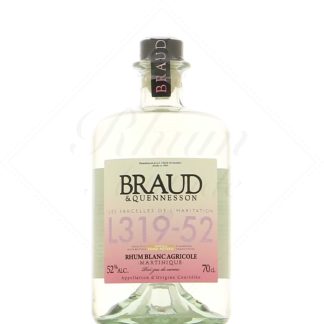
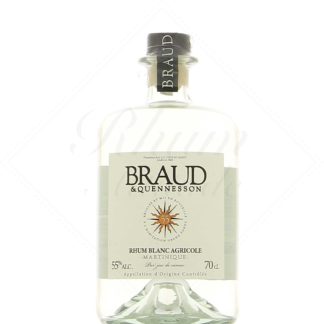
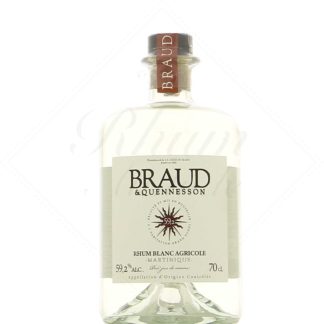
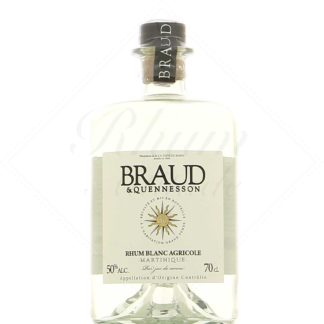
From its launch, the brand opted for premium white rums from the 2022 harvest. Three initial bottlings at 50%, 55%, and 59.2% ABV were released, followed by a single-vineyard rum (L319-52) at 52.5% ABV, both smooth and indulgent. These vintages quickly garnered attention and won medals in several competitions.
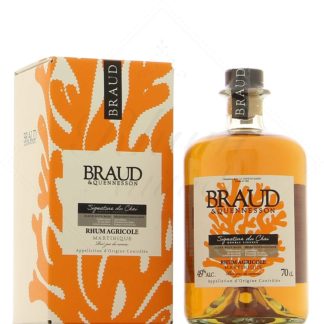
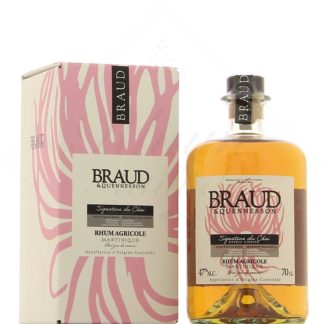
In 2023, two rums aged in oak barrels (a minimum of 12 months in casks according to the AOC regulations) were unveiled under the "Sélection du maître de chai" (Selection of the Cellar Master) label: one at 47% ABV, intended for mass distribution, and the other at 49% ABV, geared more towards wine merchants. Made from blends of French and American oak casks, they showcase the quality of the distillate and the subtlety of the wood integration.
An aged rum is currently being prepared and should be released in the coming years.
A project geared towards the future
As Octavie de Gentille points out, the distillery is considering new single-vineyard rums if certain plots reveal particular potential during tasting. A 40% ABV bottling intended for mixology is also under consideration, as is, in the longer term, the production of a single-varietal rum. However, no cask strength rum is planned at this time.
With the expansion of its plantations, the future installation of an on-site distillery , and a decidedly premium positioning, Braud & Quennesson is establishing itself as one of the most promising new faces of Martinique rum. Between historical heritage and contemporary ambition, the renaissance of Le Marin is underway. Read less
-

Braud & Quennesson white rum Agricole Parcelle L319-52 Fond Poterie 52°
- Martinique
- 52 ° - 70 cl
4 notice -
-
-
-
-