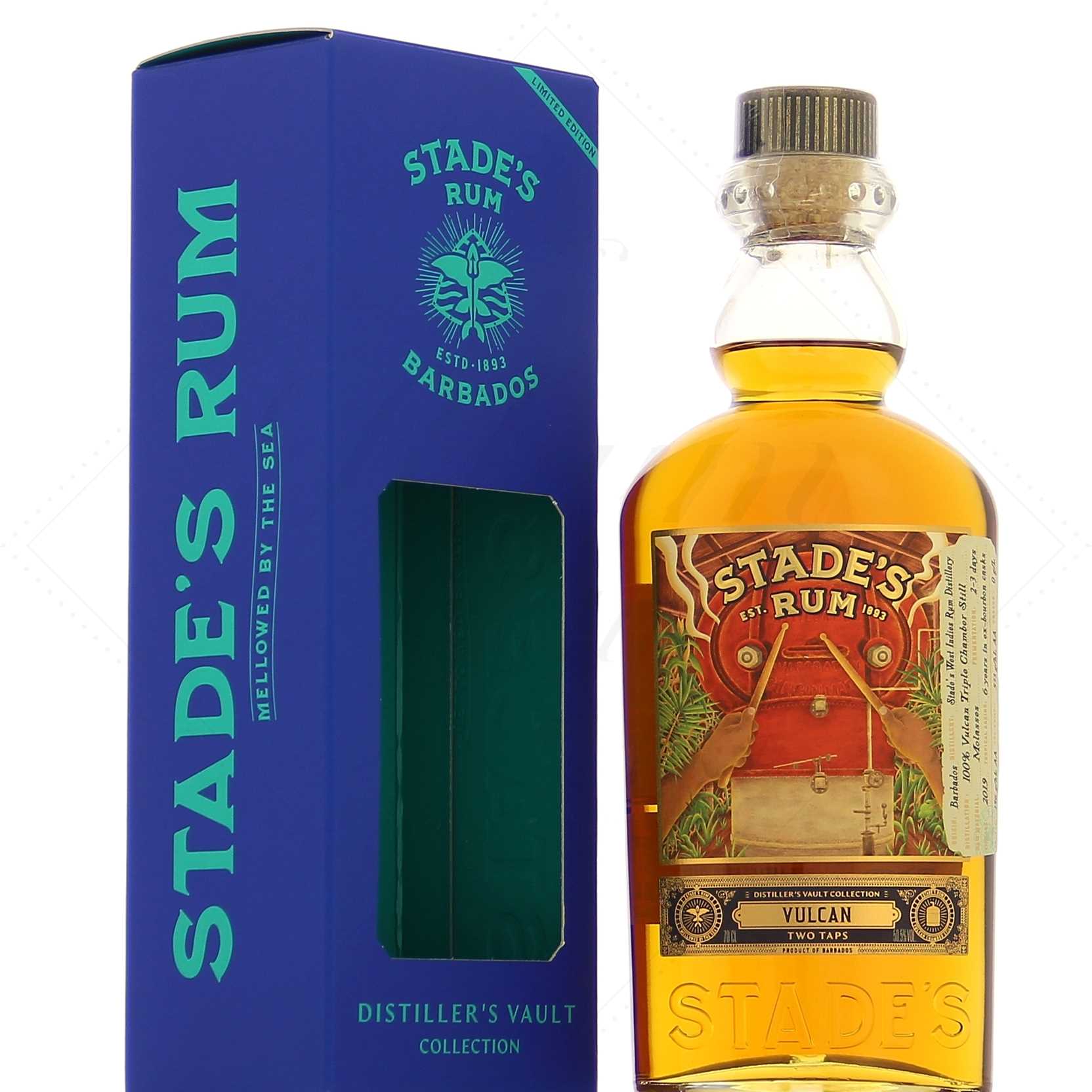
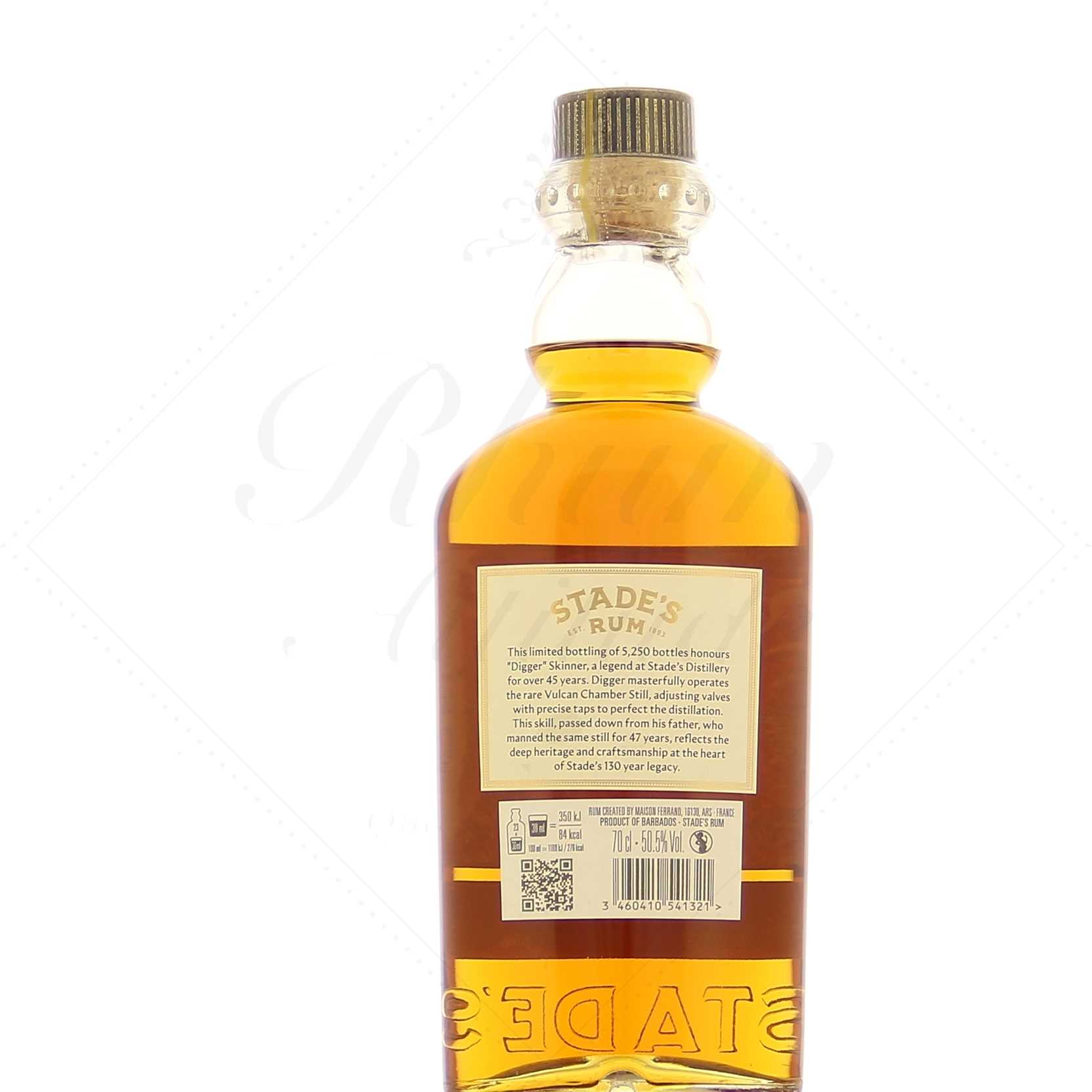
Stade's Vulcan Two Taps 2019 is a molasses rum made according to British tradition on the island of Barbados by the West Indies Rum Distillery (WIRD). The latter has been owned since 2017 by Alexandre Gabriel, also known for his work on Planteray rums.
This vintage pays homage to the Vulcan , a three-chamber still dating from the 19th century, now considered the last working example in the world. Restored to working order in 2018 thanks to the expertise of Henderson “Digger” Skinner, this still perpetuates a tradition passed down by his father: when it stops, two precise taps with a metal bar are enough to restart it. This now-legendary anecdote inspired the name “Two Taps” .
Distilled from the 2019 vintage, it was aged for 3 years in ex-Bourbon barrels .
Jérémie's tasting notes
On the nose : Candied fruits are the first aromas, with notes of apricot and quince. Then come exotic fruits, notably roasted pineapple, banana, and mango, accompanied by a slight hint of solvent, jackfruit, and fermented, milky notes. A second layer reveals a lightly toasted woodiness reminiscent of bourbon, along with sweet spices, particularly cardamom and clove. Over time, the profile gradually evolves towards richer, more pastry-like notes: caramel and vanilla linger and add a touch of indulgence.
On the palate : The attack is direct, driven by herbaceous and slightly bitter notes that then unleash the rest of the fruit in a veritable explosion of aromas. Jackfruit stands out first, followed by pineapple, which gradually gains in intensity. Pepper and the toasty character of the wood then reveal themselves, evolving towards notes of cocoa and a hint of vanilla honey, while a few herbaceous nuances bring the whole together. With aeration, the fruit becomes increasingly enveloped, as if coated in vanilla caramel.
The finish : Quite long, it revolves around a bitterness reminiscent of candied orange peel, accompanied by toasty cocoa notes that evoke a delicately caramelized marmalade. The sweet spices perceived on the nose also reappear.