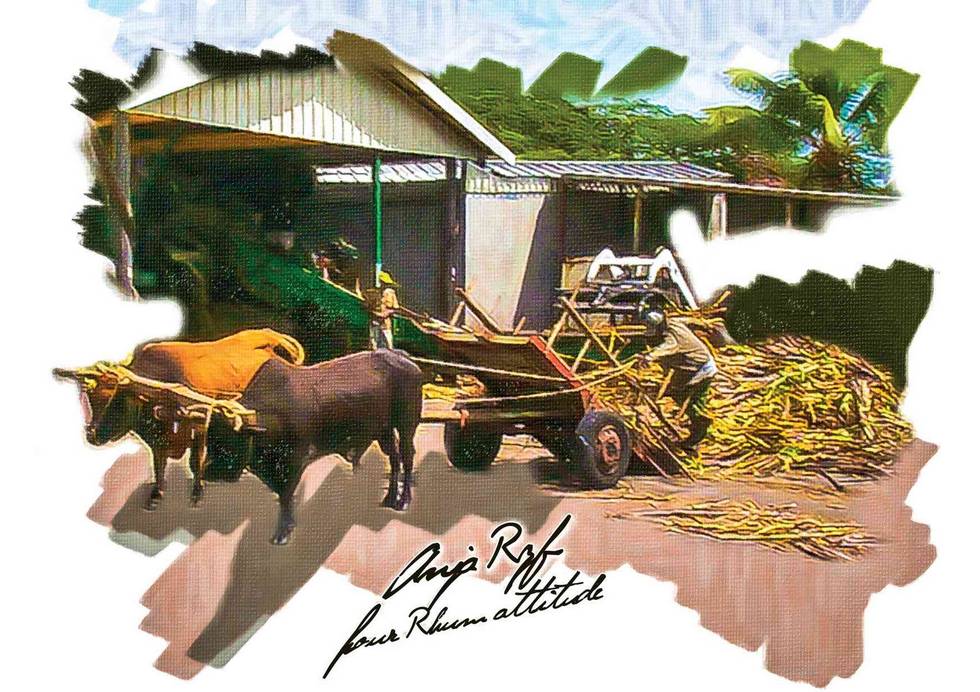
Agricultural rum and the terroir
Since the origins of rum as we know it today, which date back to the turn of the 18th century, rum was produced solely from molasses , a by-product of sugar production. It was in Martinique and Guadeloupe that rum began to be produced from pure sugar cane juice , from the second half of the 19th century.
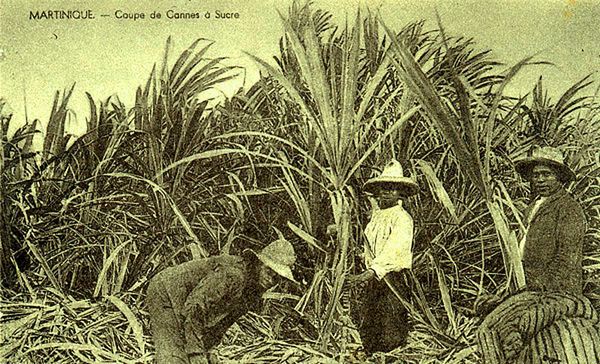 At the beginning of the same century, competition from sugar beet from the old continent and the blockades caused by the colonial wars left huge surpluses of cane to the then extremely numerous planters on these islands. This led to a reorientation of the industry sugar cane in favor of the rum and a concentration of the means of production in large central factories, which leads to the isolation of planters who are a little too far away. The latter then begin to directly distill the juice of their canes, thus giving birth to the “z'habitant” rum which will later be called “ agricultural rum ".
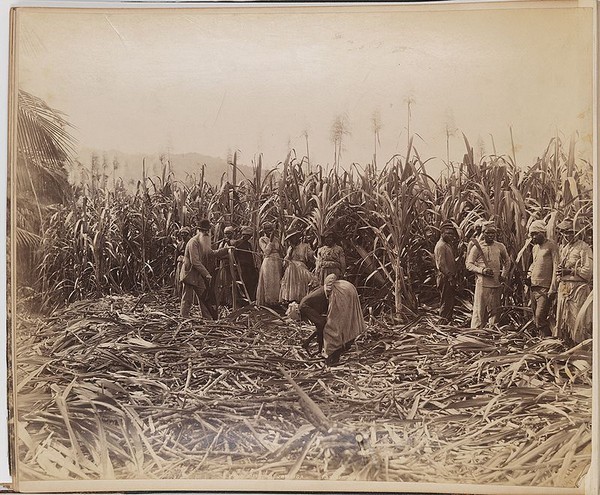 As for the molasses rums, the varieties of cane used and the terroir from which they come are of little importance. Indeed, to produce sugar, the cane juice is cooked and re-cooked, which removes all its specificities when the by-product is harvested. We still speak of several qualities of molasses, but their classification is based rather on the quantities of fermentable sugars they contain. It is more the methods of fermentation, distillation and aging that will differentiate these so-called industrial or sugar rums.
In the case of agricultural rums , in addition to the production methods, the raw material is essential since we work with very fresh pure cane juice , which gives rise to a real sugar cane brandy.
Learn more about the difference between agricultural rums and molasses rums in our article on rum production and the different types of rums .
Sugarcane varieties
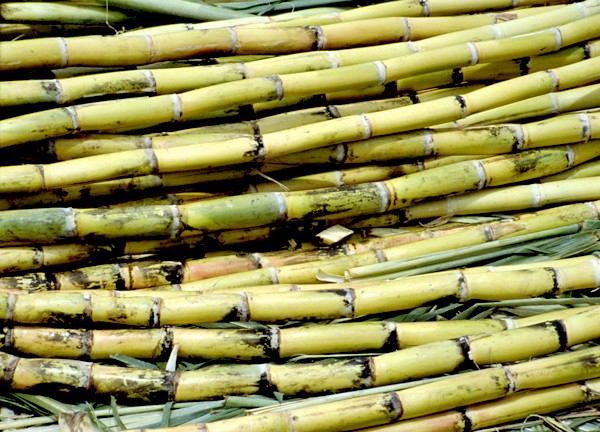
Here are some examples of sugarcane varieties used by agricultural rum producers. Many of these canes were developed in Barbados , and a few of them in Reunion . Some are more recent than others, for example R.583 was officially planted for the first time in 2008. They are all from the Saccharum Officinarum family and are the result of hybridizations (often with Saccharum Robustum ) which allowed them to adapt to a certain type of terrain or climate.
You will also find examples of single-variety rums corresponding to each type of cane.
Zicak cane B.80.08 Neisson L'Esprit Bio 70°
Blue Cane B.69-566 Clément Blue Cane 2020
Non-hybrid Clairin Sajous crystal cane
Black Cane B.46-364 Bologna Black Cane
Red Cane R.579 Longueteau RSMA Red Cane 60°
A once forgotten primitive species has been reintroduced to the Rangiroa atoll in French Polynesia, it is the O'tahiti . It is the origin of Mana'o and Manutea rums and constitutes a species in its own right which is also part of the lineage of the queen Saccharum Officinarum .
The concept of terroir
The notion of terroir is gaining ground among producers and enthusiasts, and with it the interest in transparency and understanding of the product. This is how single-varietal vintages (like single-varietal wines) were created in the early 2000s, with Clément being the spearhead. Of course, some vintages were already single-varietal (like Neisson 52.5 for example) but the distilleries did not necessarily want to mention this until then.
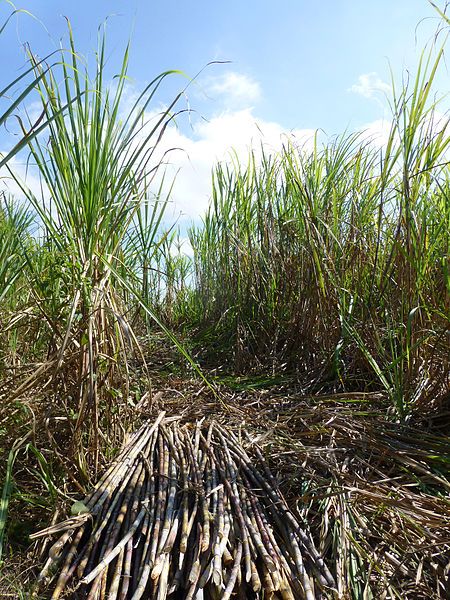 What was initially perceived as a mere marketing ploy ultimately had interesting spin-offs. It was a sign of growing demand for transparency and apprehension of this notion of terroir. Understanding that the cane variety (and above all its terroir) was important in the character of the rum, the spirits lover also understood that the harvest years and their climatic conditions also had a great impact.
HSE has therefore also decided to highlight its white rums by indicating the year of their harvest. Then it was Longueteau in Guadeloupe that made a big splash 10 years later by presenting not only single-varietal selections, but also single-plot selections, which are probably even more relevant. The notion of terroir is thus perfectly understandable when comparing a red cane from the seaside to another that grew in a drier place.
Because it turns out that ultimately the variety of cane used counts much less than the sunshine, the orientation, the rainfall or the soil of its plot. This is what the notion of terroir means in agricultural rum . These are the criteria that will determine its sugar content, just like the freshness of its cut or the way it was crushed.
The ultimate respect for the land: organic
Organic is now the next step towards full respect for raw materials and the terroir. Neisson has successfully embarked on the adventure, followed by A1710 and Mana'o in Tahiti. Organic cane plots are multiplying in Martinique, and sustainable agriculture (even if it is not necessarily certified organic) is being emulated around the world.
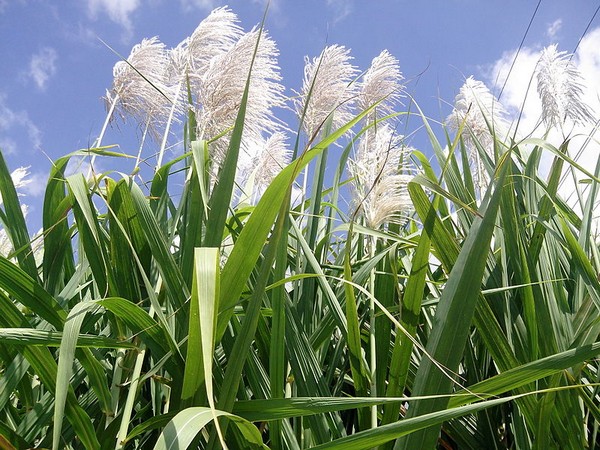
Among producers of organic agricultural rums , we comply with the extremely strict specifications of the AB label. First, the plot must be free of any dangerous pollutants, which must be anticipated well in advance because it requires a period of land conversion. During this conversion of the plots and of course afterwards, we do not use phytosanitary products other than organic and we opt for manual or mechanical weeding, among many other things, which causes very high costs.
As a reward for all this effort, we obtain rums that have not been disturbed in any way by external inputs. These are the most faithful possible expressions of the terroir, without however pushing the analogy with wine too far, because rum is a distilled product that leaves a whole bunch of elements at the bottom of the still.
It should also be noted that Neisson cultivates its own yeasts from its organic plots. This is an additional step towards a complete transcription of their terroir.
At A1710 , we have chosen to present two different organic plots, one where blue cane grows and another where red cane is cultivated. This educational and fun exercise also results in two excellent rums.
Find a brief history of sugar cane in the previous article dedicated to it.
Hello, can I know what the dosage is for preparing rum, i.e. what quantity of molasses? for what quantity of water? before the fermentation stage?
Thank you very much
Good morning,
In general, to prepare a must, we use 6 or 7 liters of water for 1 liter of molasses. Have a nice day 🙂
Iaorana what is the most requested variety of sugar cane. Because I would like to start planting in Rurutu
Thank you and have a nice day.
Green rod B.76-56 Montebello Winch
I thought it was red cane...
Hello, it seems that the recipe has indeed changed, since Montebello now communicates on the red cane. Thank you for this remark, we have modified the article accordingly.